In RF and IoT environments, attackers weaponize normal-looking behavior and misconfigurations. Treating anomalies as “probably nothing" creates blind spots that adversaries exploit and lets small hazards grow into incidents. Responding with the right tools is essential to gain clarity and act quickly.
Many attacks begin as ordinary protocol flows such as pairing attempts, beacons, scans, or join requests. These misconfigurations mimic adversary behavior, such as the use of legacy ciphers, open SSIDs, permit-join windows, or unsecured pairings. Radio frequency varies because channel conditions and mobility cause patterns to be intermittent. And waiting for certainty often means waiting too long. Keep in mind that one false negative is far more expensive than several quick triages.
Why normal-looking events still matter
Adversaries can hide within protocol norms such as BLE Just Works, Classic HID opens, Zigbee permit-join, LoRa join bursts, and Wi-Fi deauth for roaming tests. The malicious intent ultimately manifests in context. Look for red flags such as persistence, fan-out, proximity to protected assets, and privilege escalation attempts. Small signals chain together, creating a scan storm; one pairing success can equal compromise.
When these situations occur, be aware of your biases:
- Normalcy bias - a false sense of security
- Optimism bias - the inclination to over- or underestimate the circumstances
- Confirmation bias - the tendency to interpret new evidence as confirmation of your theories
- Sunken cost and bandwidth bias – the desire to compare past experience in your decision-making process.
Triage the Situation Using the FP^3 model
How It Works: Score each observation on five dimensions and investigate when the total is greater than 5 or any single dimension is extreme.
- Frequency – how often does this issue occur in a certain time window?
- Proximity – what is the RSSI and location context near protected assets?
- Fan-out – what is the number of unique targets or services touched?
- Privilege – what the action could grant if accepted or if it succeeds?
- Persistence – does it recur on a schedule or reappear after failure?
Here are some example scores:
- BLE: Pairing bursts to 3 laptops in 30 min → F2 P1 F/O2 Priv2 Pers1
- BT Classic: HID PSM 0x11/0x13 from unknown → F1 P2 F/O0 Priv2 Pers1
- Zigbee: Permit-join broadcast at 10:15 → F1 P1 F/O1 Priv2 Pers0
- Wi-Fi: Evil twin with higher RSSI → F1 P2 F/O1 Priv2 Pers1
- LoRaWAN: Join-Request bursts + Join-Accept → F1 P1 F/O0 Priv2 Pers2
Addressing the Issues Using PANalyzr
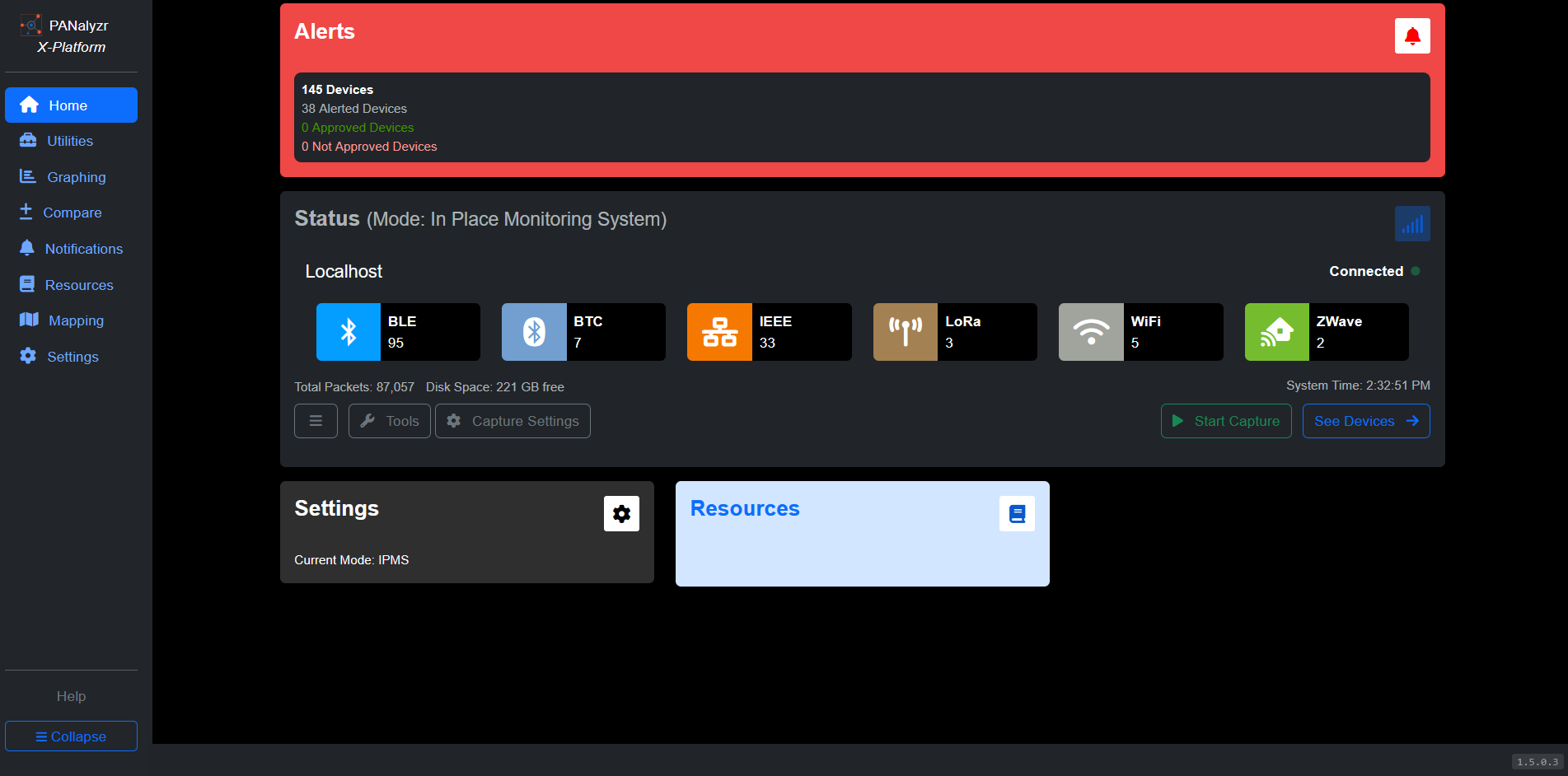
The PANalyzr is a state-of-the-art, affordable, wideband, multi-protocol Personal Area Network (PAN) Analyzer. Here is how it can best be used in the above situations.
- Use the allow lists for known devices, BSSIDs, HomeIDs, and PAN IDs. Treat mismatches as Medium by default and escalate by the FP^3 model.
- Turn events into watch rules with windows (for example: BLE pairing ≥2 in 15 min; Wi-Fi deauth >50/min; Zigbee permit-join outside maintenance).
- Prioritize by proximity with >= RSSI filters in secure rooms.
- Correlate repetition: raise severity level when a source reappears 3 times in 24 hours.
- Capture evidence automatically on trigger: PCAP/CSV slice and FP^3 context.
Even if you think it is “probably nothing,” maintenance windows and change tickets: auto-downgrade during approved work but still records. Dynamic baselines last over 7–30 days. The two-stage triage model tracks a 60–90-second process in stage 1 and escalates only if the risk remains. A decision log provides a disposition with rationale because the allow-list is based on evidence, not a gut feel.
Instances when “nothing” became something
- BLE Just Works prompts dismissed by users; FP^3 total 6; rogue keyboard under desk.
- Zigbee permit-join at 10:15; new light reporting to unknown coordinator.
- Wi-Fi evil twin beacon higher RSSI in conference room; two clients leaked credentials.
- LoRaWAN two Join-Requests every 15 minutes; hidden sensor on demo badge left active.
Why Use PANalyzer
Using a tool like the PANalyzer allows companies a method to identify risk and solve related issues with data-based evidence instead of anecdotal and potentially biased theories. It takes 90 seconds to confirm or dismiss risk, record the outcome, and have peace of mind that your systems have not been compromised.